
Hyderabad has been showing a very different kind of startup energy in the last few years. It doesn’t always shout the loudest, and it doesn’t always chase trends the way other ecosystems do, but something steady has been building underneath.
From deep-tech labs and biotech experiments to climate-focused systems and hardware-first companies, the city has been quietly expanding what “startup innovation” can actually look like when it’s rooted in real problems, supported by the broader Telangana government.
As many of these startups move from building to actually going to market, there’s also been a visible rise in demand for specialized support, especially from the best go-to-market agencies in Hyderabad for Saas startups that can help translate complex products into clear positioning, messaging, and early traction.
What makes this shift interesting is not just the number of companies coming out of Hyderabad, but the kind of thinking behind them. Many of these founders are not trying to copy existing models or build incremental tools.

They are working on systems that deal with waste, energy, mobility, healthcare, space, and food in ways that feel more foundational than cosmetic.
Some are early-stage, some are still evolving, and some are already scaling into larger ecosystems, but they all sit in the same larger movement of trying to solve problems that actually matter in daily life. The city’s growth is also strongly connected to institutions like T-Hub Hyderabad innovation ecosystem, which has played a role in enabling deep-tech and startup acceleration over time.
In this blog, we’ll break down the key venture capital firms operating in Hyderabad, what kind of startups they typically invest in, and how they differ in terms of stage, sector focus, and approach. You’ll also get a clearer sense of where your startup might fit, and how to think about choosing the right investors based on your growth stage and long-term direction.
Our approach to selecting these startups in Hyderabad
As Hyderabad continues to grow alongside cities like Bangalore, it is becoming clearer that innovation here is not one-dimensional. It is layered, technical, and often quietly ambitious.
What makes this even more interesting is how the city is increasingly being viewed as a strong launchpad for new ventures, especially for founders looking for a balance between infrastructure, talent, and ecosystem support.
In fact, multiple ecosystem discussions highlight whether Hyderabad is a good place to launch a startup, especially when compared with more saturated startup hubs in India. The following startups are part of that evolving story, and they offer a glimpse into how the city is shaping the next wave of Indian entrepreneurship in its own way.
This list is not about ranking or comparison, and it is definitely not about saying one set of startups is better than another. Hyderabad has a wide and diverse startup ecosystem, and every founder is building here.
Whether in the very early days or at a more advanced stage, growth is part of a larger ecosystem story, one that also includes service enablers like the top SEO agencies in hyderabad, helping startups build visibility alongside innovation. Innovation doesn’t always look the same at every stage, and even the smallest step in the right direction contributes to how an ecosystem evolves over time.
To keep this selection grounded and useful, the startups featured here were chosen based on a few consistent factors. This includes the relevance of the problem they are trying to solve, early signs of traction or real-world application, and their contribution to emerging sectors such as deep-tech, sustainability, healthcare, mobility, or industrial innovation. The intent is to focus on signal, not noise.
The startups featured here have been selected to reflect that diversity of thinking. Some are early-stage, some are evolving, and some are already scaling, but each of them represents a different direction of experimentation happening within the city.
The idea is not to exclude others, but to highlight a few examples that help illustrate how wide and layered Hyderabad’s startup landscape has become.
Let’s dive into the startups that are quietly defining this next phase.
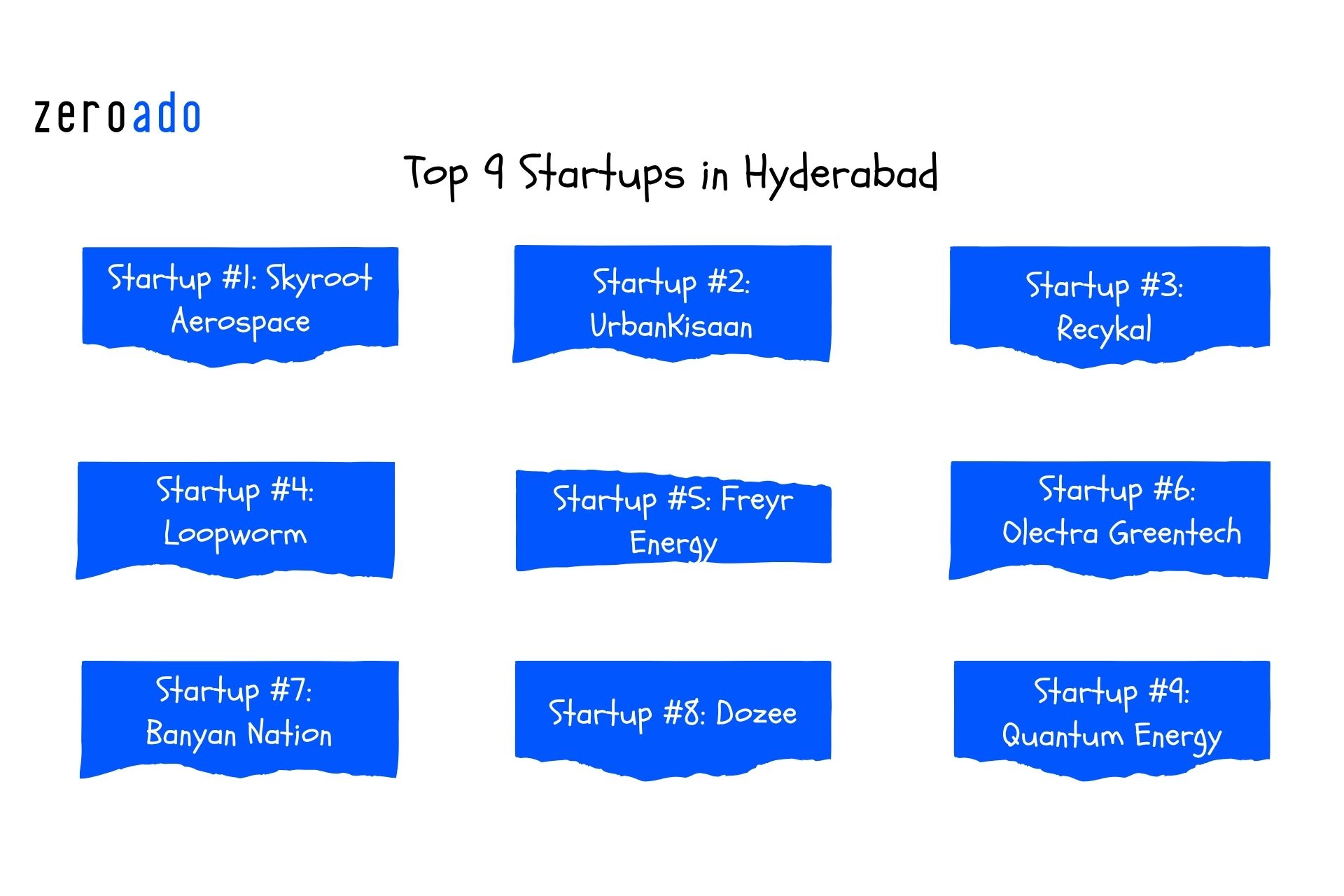
9 startups quietly defining Hyderabad’s innovation landscape
Hyderabad’s startup ecosystem is expanding in ways that aren’t always loud, but are steadily impactful. Across sectors like space-tech, agritech, health-tech, and sustainability, a new set of companies is working on problems that have real-world relevance.
These startups may be at different stages, but together they reflect how the city is building depth, not just scale. What follows is a closer look at a few of these ventures shaping that shift.
Startup #1: Skyroot Aerospace

Skyroot Aerospace is a Hyderabad-based private space-tech startup focused on building cost-effective launch vehicles for small satellites. The company represents a shift toward private participation in space exploration, making access to space more commercially viable.
What are they really building (and why it matters more than it sounds)
At first, it sounds straightforward. Skyroot Aerospace is building rockets. But what they’re really trying to change is how access to space works in the first place.
Their Vikram series of launch vehicles is designed for small satellites, a segment that’s growing quickly as The problem is, while satellites have become smaller and more affordable, launch systems haven’t kept up at the same pace. Launching is still expensive, infrequent, and often dependent on government schedules.
This is exactly where Skyroot is positioning itself, and you can see their direction more clearly through their work on private small satellite launch systems and commercial space access technology. Skyroot is trying to shift this landscape. The idea is to make launches more responsive and commercially viable, something closer to an on-demand service rather than a rare, high-cost event. If you look at how the global conversation around small satellite launches is evolving, you’ll notice this exact gap being discussed repeatedly.
It didn’t start as a startup idea, it started inside ISRO
This story doesn’t begin with a pitch deck. It begins inside ISRO, where both founders, Pawan Kumar Chandana and Naga Bharath Daka, were working as engineers on launch vehicle programs.
Being inside that system gave them a front-row view of how things worked and where the gaps were. Globally, satellites were getting smaller and more accessible, but launch opportunities weren’t scaling at the same rate. There was a growing mismatch between supply and access.
Over time, that gap became difficult to ignore. It wasn’t an instant decision to leave, but the idea slowly took shape. If the system couldn’t evolve fast enough from within, maybe it needed to be rebuilt from the outside.
That thinking is often reflected in their early interviews and conversations, especially in discussions around Skyroot Aerospace founder Pawan Kumar Chandana’s journey and ISRO-to-startup transition stories, where they talk about how that shift in mindset actually began.
The bold decision: leaving the system to rebuild it from scratch
In 2018, they stepped out and founded Skyroot Aerospace in Hyderabad. At that point, this wasn’t an obvious move. India’s private space sector hadn’t fully opened up yet. Regulatory clarity was limited, and building rockets is one of the most capital-intensive and technically demanding things a startup can attempt.
But they chose to go after it anyway.
Instead of building a small component or offering a service around space, they decided to take on the core problem itself, launch vehicles. It’s the kind of decision that only makes sense if you’re willing to spend years building without immediate validation.
The breakthrough moment: when a private indian rocket actually took off
For the first few years, everything stayed behind the scenes. Testing, simulations, design iterations. Then, in November 2022, something shifted.
Skyroot successfully launched Vikram-S, a suborbital rocket, making it the first private Indian company to send a rocket into space. The mission was carried out with authorization from IN-SPACe and support from ISRO, reflecting the broader policy changes that allowed private participation.
This wasn’t a commercial mission. It was a demonstration. But it proved something fundamental, that a private startup in India could design, build, and launch a rocket successfully.
The moment was widely documented and analyzed across the media, especially in detailed coverage of the Skyroot Vikram-S launch as a turning point for India’s private space industry, where the focus wasn’t just on the rocket itself but on what it represented for the future of commercial space access in India.
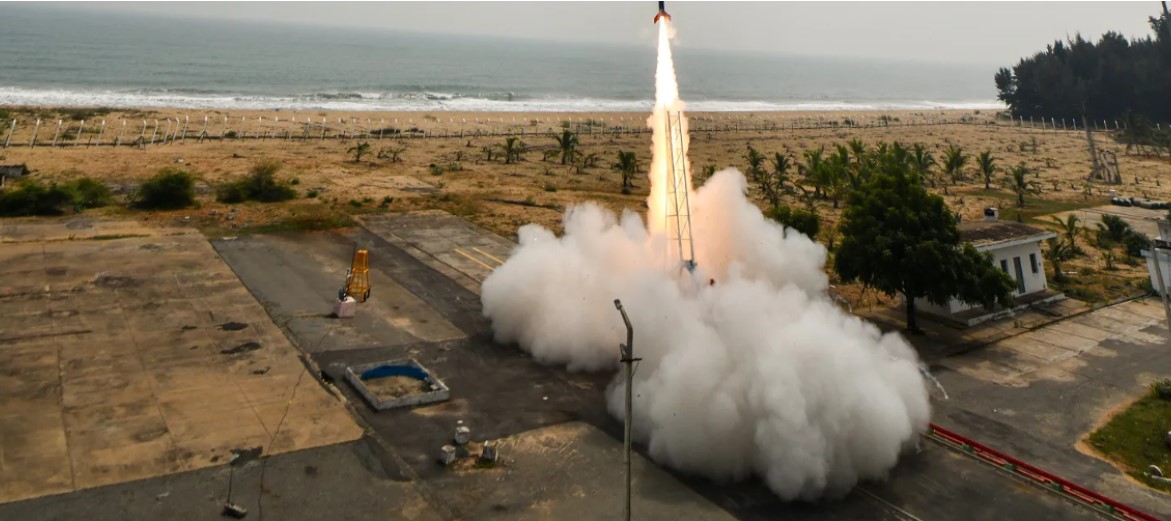
If you go deeper into the actual visuals and explanations of the mission, the launch coverage also helps you understand the scale of what was achieved. Multiple breakdowns and video explainers highlight the technical execution and significance of the event, especially in Skyroot Vikram-S launch coverage and mission analysis, which give a clearer sense of how this milestone unfolded in real time.
What added further visibility to this moment was the fact that India’s leadership also recognized the significance of private participation in the space sector, with Prime Minister Narendra Modi highlighting the importance of opening up space exploration and encouraging startups like Skyroot Aerospace as part of India’s broader innovation-driven space reforms.
Early days weren’t glamorous: funding, belief, and proving credibility
Before any of that happened, the early years were about survival and credibility.
Skyroot raised initial funding from investors like Kalaari Capital and Speciale Invest, both known for backing deep-tech ventures. These early investments were critical because rocket development doesn’t generate quick returns. It requires time, patience, and sustained capital.
In 2022, they raised a larger round of around 51 million dollars, with participation from investors including GIC. This wasn’t just a funding event, it was a signal that global investors were starting to take India’s private space ecosystem seriously.
That momentum has continued to build, with recent developments showing how strongly Skyroot is positioned in the market. According to the reports of The Economic Times Skyroot Aerospace’s planned ₹1,800 crore raise at a unicorn valuation highlights not just the scale of capital being targeted, but also the confidence investors now have in India’s private space capabilities. It reflects a clear shift, from early-stage belief to large-scale financial backing driven by proven progress.
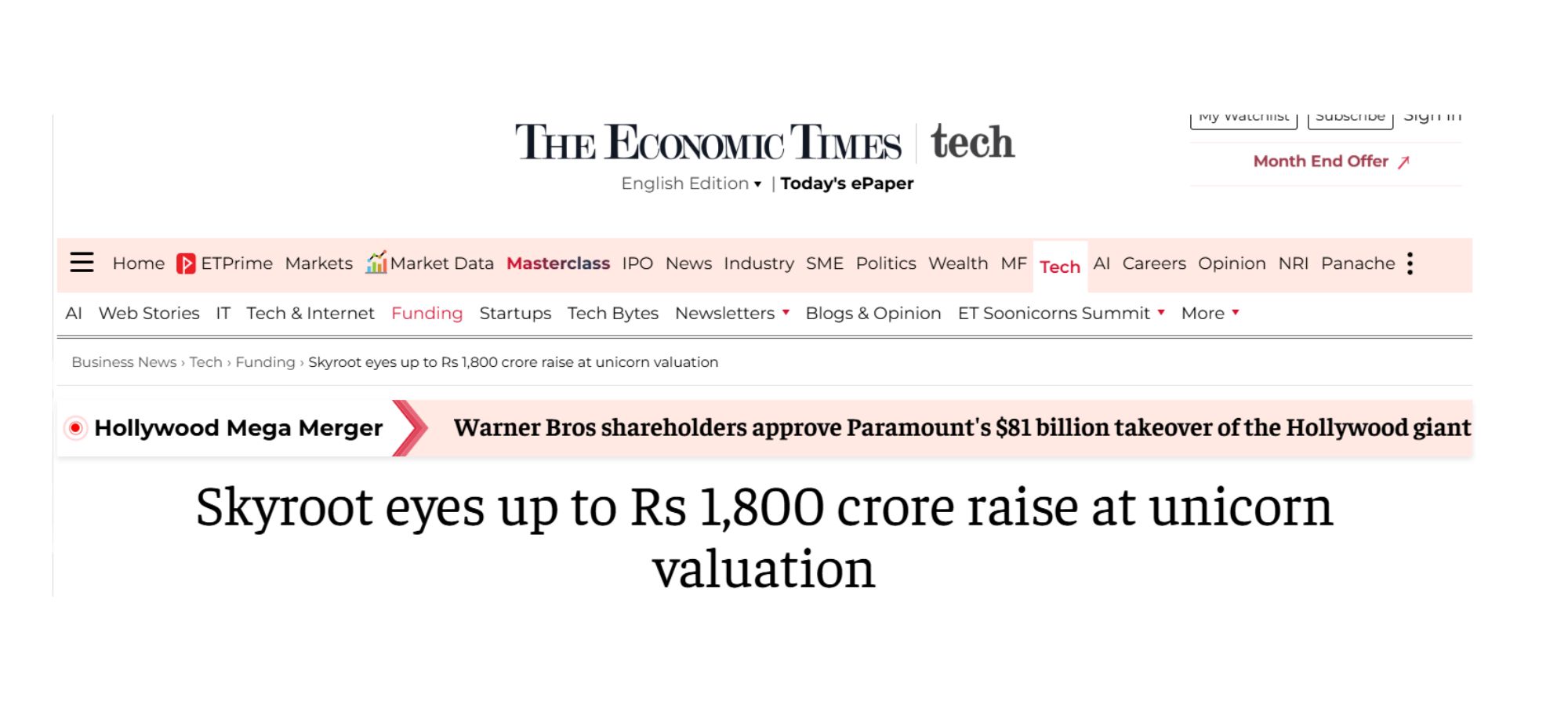
What makes this particularly significant is the transition from experimentation to execution. Skyroot is no longer just a promising startup; it’s operating in a space where consistent funding, successful launches, and growing global interest are aligning. This phase is less about proving the idea and more about scaling it, building reliable launch infrastructure, and positioning India as a serious player in the commercial space race.
Building rockets, not hype: what they focused on for four years
Between 2018 and 2022, Skyroot stayed relatively quiet in public. There were no flashy product launches or aggressive expansion moves. Most of the work was happening behind closed doors.
They focused on propulsion systems, structural design, and repeated testing cycles. One of their notable developments includes the use of 3D printing for rocket engine components, such as the Raman engine, which helped reduce manufacturing complexity and time.
The hard part no one talks about: regulation, risk, and uncertainty
Even now, the journey isn’t straightforward.
India’s space sector has opened up, but it is still finding its shape. Companies like Skyroot are building rockets, yes, but they are also building inside a system that is still learning how to include them.
Institutions like IN-SPACe exist to enable private participation, yet the reality on the ground is still evolving, with approvals, coordination, and mission pathways moving through processes that are relatively new and still being refined as the ecosystem matures.
There is no fixed playbook here. Unlike older industries where rules are stable and predictable, this is a space where the framework and the companies are growing at the same time. That means every step forward is not just an engineering decision, but also a negotiation with uncertainty, interpretation, and timing.
And then comes the part that doesn’t make it into headlines.
Rocket development is slow, fragile, and unforgiving. Every system is built to survive extreme conditions, and every test exists to expose what might fail. When something doesn’t work, it is not a simple error to fix. It often means going back into design, rethinking assumptions, rebuilding components, and repeating cycles that already take months. Progress here is not linear. It moves in bursts, pauses, and restarts.
Delays are not exceptions. They are part of the process.
And layered on top of that is something less visible but always present: expectation. A private space company in India does not operate quietly. Every test, every milestone, every pause is observed closely, often interpreted before it is understood. That creates a pressure where technical work and public narrative move together, even when they are not aligned.
In that overlap, between evolving regulation, physical uncertainty, and constant visibility, Skyroot’s journey becomes something more complex than just building rockets. It becomes an exercise in continuing forward in a system that is still learning how to let you move.

Why skyroot isn’t just a startup, it’s a structural shift
What Skyroot represents goes beyond one company.
For decades, space activity in India was almost entirely driven by government institutions. With private companies like Skyroot entering the picture, that structure is beginning to change.
It’s moving toward a system where private players can build, launch, and operate alongside national agencies. That shift has implications not just for India, but for how emerging space economies develop globally.
If you trace how this transition is being discussed across reporting, interviews, and launch analysis, it consistently appears in broader conversations around the emergence of India’s private space ecosystem and Skyroot’s role in it. This is where the narrative starts to move beyond a single mission and into a larger structural change.
When you step back and look at how consistently Skyroot shows up across news, interviews, and launch coverage, a pattern becomes clear. This isn’t just about one rocket. It’s about a new model taking shape.
Startup #2: UrbanKisaan
At first, UrbanKisaan might look like a premium vegetable brand. But that’s not really what they’re building.
The idea is simple but practical: reduce supply chain distance while maintaining consistency in quality and yield. By combining technology with local distribution, it’s trying to rethink how cities access everyday essentials like leafy greens and herbs.
What are they really building (and why it matters more than it sounds)
What they’re actually trying to do is rethink how food is grown, especially in cities where traditional farming just doesn’t scale. Their model is based on hydroponics, a method of growing plants without soil, using nutrient-rich water in controlled environments.
This changes a lot of things at once. It reduces dependency on land, cuts down water usage significantly compared to traditional farming, and most importantly, brings food production closer to consumption. Instead of transporting vegetables across states, the idea is to grow them within or near the city itself.
If you look closely at how this system is structured, especially through their approach to solving hydroponic farming for scale with low-cost infrastructure in urban environments, it becomes clear that the focus is not just on growing vegetables, but on rethinking the entire supply chain of fresh food production in cities.
It didn’t start as a trend, it started with a frustration around food
UrbanKisaan was founded by Vihari Kanukollu, Dr. Sairam Palicherla, and Srinivas Chaganti with a fairly simple but personal concern, the quality and reliability of the food they were consuming.
Like most urban consumers, they were dependent on supply chains they didn’t fully understand. Questions around pesticide use, freshness, and traceability kept coming up. And when they looked deeper, the issue wasn’t just about one bad batch or one supplier. It was structural.
Traditional agriculture is heavily dependent on variables that are hard to control, soil conditions, weather, logistics, and middlemen. Instead of trying to fix one piece of that system, they started exploring whether the system itself could be redesigned.
That exploration led them to hydroponics.UrbanKisaan is close to where your home is creating a complete transparent supply chain with low-carbon footprint. Their produce is filled with nutrients and wholesome goodness harvested just minutes away before delivery.
The bold decision: growing food without soil in a country built on traditional farming
Starting a hydroponics-based farming company in India isn’t the obvious choice. Agriculture here is deeply rooted in tradition, and for good reason. It has worked for decades at scale.
So introducing a soil-less farming model comes with its own set of challenges. It’s not just about building the technology. It’s also about convincing people that this method is reliable, safe, and worth adopting.
UrbanKisaan leaned into this challenge instead of avoiding it. They set up controlled environment farms where variables like nutrients, water, and climate could be managed precisely. The idea wasn’t to replace traditional farming overnight, but to create an alternative model that works better in urban contexts where land is limited and demand for clean, fresh produce is rising.
But beyond the technology, their growth also depended on how effectively they connected with their immediate market. For businesses like this, success often comes down to visibility, trust, and community engagement, which is where practical strategies and tips to boost your business locally start to play a critical role in driving adoption.
This can include educating nearby consumers, partnering with local retailers and restaurants, leveraging hyperlocal digital marketing, and building transparency around the product journey. In many ways, the adoption of a new farming model isn’t just a technological shift, it’s a local mindset shift, built step by step through consistent outreach and credibility.
The breakthrough moment: when people started trusting the system, not just the product
For a long time, the bigger challenge wasn’t growing the produce. It was building trust.
Convincing customers to buy vegetables grown without soil requires a shift in mindset. People are used to associating soil with “natural” and anything outside that with uncertainty.
UrbanKisaan approached this by focusing on transparency and experience. Instead of just selling produce, they created spaces where people could see the farming process themselves, understand how hydroponics works, and build confidence in the system.
Over time, this started working. Customers weren’t just buying lettuce or herbs. They were buying into a more controlled, traceable way of growing food.
Early days weren’t glamorous: building the system before scaling it
Like most hardware or infrastructure-heavy startups, UrbanKisaan’s early phase wasn’t about rapid scaling. It was about figuring out the system.
Setting up hydroponic farms requires:
consistent nutrient management,
controlled environments,
and reliable operational processes.
Before expanding, they had to make sure that the output was consistent. That the same quality could be maintained across cycles. That the economics made sense.
Compared to software startups, this is slower and more capital-intensive. But it also creates a stronger foundation once things start working.
Over time, they raised funding to expand their operations, with coverage around their growth and expansion appearing across business media. As the model started gaining traction, it also started attracting attention from players in the global agriculture and materials science ecosystem, especially those exploring sustainable farming technologies.
One of the more notable validation moments came when BASF, a global chemical and agricultural solutions company, invested in UrbanKisaan, signaling confidence in the scalability of hydroponics as a viable solution for urban food production. This move was covered in detail, particularly in discussions around BASF’s investment in UrbanKisaan’s hydroponics-driven farming model for sustainable agriculture expansion, which highlighted how traditional industry players are beginning to take urban farming systems seriously.
Building farms, not just a brand: what they focused on over the years
UrbanKisaan didn’t position itself just as a consumer brand. The real focus has been on building farming infrastructure.
They’ve worked on setting up urban farms, refining hydroponic techniques, and integrating the supply chain from production to retail. This vertical integration allows them to control quality more tightly than traditional supply chains.
It also means they’re not dependent on external farmers for consistency. They own the process end to end.
The hard part no one talks about: changing habits, not just systems
One of the biggest challenges UrbanKisaan faces isn’t technical, it’s behavioral.
Food habits are deeply personal. People don’t change how they buy or consume food easily. Even if the product is objectively cleaner or more efficient to produce, adoption takes time.
There’s also the question of pricing. Controlled-environment farming can sometimes be more expensive than traditional produce, especially in the early stages.
So the challenge becomes balancing:
education,
affordability,
and trust.
Why urban kisaan isn’t just a farming startup, it’s a shift in how cities think about food
What UrbanKisaan represents goes beyond hydroponics.
It reflects a larger shift toward localized food systems, where cities are not entirely dependent on distant agricultural supply chains. As urban populations grow, this becomes increasingly relevant.
Instead of asking “how do we transport food better,” the question slowly becomes “how do we grow food closer to where it’s consumed.”
UrbanKisaan is one attempt at answering that.
And if this model scales, it could reshape how urban food supply works, not just in Hyderabad, but in other dense cities as well.
Startup #3: Recykal
At first, Recykal might sound like just another waste management company. But that’s not what they’re doing. Instead of only handling collection or recycling, the focus is on connecting producers, recyclers, and regulators through a structured platform.
What are they really building (and why it matters more than it sounds)
They’re building a digital infrastructure layer for waste and recycling, something that didn’t really exist in a structured way before. Instead of physically collecting waste like traditional players, Recykal connects all the stakeholders involved, brands, recyclers, waste collectors, and regulators, into one system.
The idea is simple, but the execution is not. Waste in India is highly fragmented. There are informal networks, inconsistent tracking, and very little transparency. Recykal is trying to bring visibility and accountability into that system through technology.
It didn’t start as a business idea, it started with a broken system
Recykal was founded in 2016 by Abhay Deshpande, and the starting point wasn’t innovation for the sake of it. It was a clear problem.
India generates massive amounts of waste, but the system managing it is largely unorganized. A significant portion of recycling happens through informal networks, which means there’s very little traceability. For companies that are legally required to manage their waste under regulations like Extended Producer Responsibility (EPR), this becomes a serious challenge.
The problem wasn’t that recycling didn’t exist. It was that it couldn’t be tracked, verified, or scaled efficiently. This gap is widely reflected in broader discussions around India’s recycling infrastructure challenges and the limitations of EPR implementation in a fragmented waste management system, where the lack of transparency and standardization is often highlighted as the core bottleneck.
That gap, between regulation and execution, is where Recykal stepped in.
The bold decision: digitizing something that was mostly informal
Trying to digitize waste management in India is not the obvious route. This is a sector that operates heavily offline, often through informal workers and decentralized processes.
But that’s exactly where Recykal saw the opportunity.
They built a platform that allows:
waste to be tracked from source to recycling,
transactions to be recorded,
and compliance to be managed digitally.
This becomes especially important for brands and companies that need to prove they are meeting regulatory requirements. Instead of relying on paperwork and manual verification, they can use a system that provides traceability.
The breakthrough moment: when regulation and technology finally aligned
Recykal’s growth is closely tied to how India’s regulatory environment evolved, especially around waste management and EPR compliance.
As enforcement around these regulations became stricter, companies needed better systems to track and report their recycling efforts. This is where Recykal’s platform started becoming more relevant.
Instead of building demand from scratch, they were positioned at the intersection of:
regulatory pressure,
corporate responsibility,
and technological capability.
Recykal Marketplace connects bulk waste generators, waste aggregators, recyclers and enables transactions between them bringing transparency, traceability to the ecosystem
Early days weren’t glamorous: building trust in a fragmented ecosystem
One of the hardest parts of building Recykal wasn’t the technology. It was getting different stakeholders to trust and adopt the system.
Waste management involves multiple layers:
informal collectors,
aggregators,
recyclers,
brands,
and regulators.
Bringing all of them onto a single platform requires more than just a good product. It requires credibility and alignment.
In the early days, adoption would have been slow and relationship-driven. Convincing stakeholders to move from informal processes to a structured digital system is not something that happens overnight.
Over time, as more companies came onboard and regulations tightened, this trust started compounding. What began as a fragmented, trust-heavy onboarding process gradually started shifting toward a more structured industry-wide acceptance, especially as the need for transparency in waste tracking became harder to ignore.
This transition phase is often reflected in how the company’s growth started gaining visibility in funding and industry conversations, particularly around Recykal’s INR 110 crore Series B funding raise for scaling its B2B waste management and recycling infrastructure platform, which highlighted how investor confidence aligned with the increasing regulatory push toward formalized waste management systems.
Building infrastructure, not visibility: what they focused on over the years
Recykal’s approach has been relatively low on noise and high on execution.
Instead of focusing on brand visibility early on, they concentrated on building:
a scalable platform,
a strong network of recyclers,
and integrations with enterprise systems.
This is the kind of work that doesn’t always show up publicly but becomes extremely valuable over time. Once a platform like this is embedded into compliance and operations, switching becomes difficult.
That’s where long-term value starts building.
The hard part no one talks about: fixing inefficiency at scale
Waste management at scale comes with challenges that are easy to underestimate.
There’s inconsistency in data, lack of standardization, and dependency on physical processes that can’t be fully controlled. Even with a digital layer, execution on the ground remains complex.
Then there’s the challenge of aligning incentives. Every stakeholder in the chain operates differently, and bringing them into a unified system requires constant balancing.What makes this even harder is that waste is not a single-stream problem.
It varies by material type, geography, and collection infrastructure, which means the same solution doesn’t work uniformly across regions. A system that works in one city can fail in another simply because the underlying collection ecosystem behaves differently.
Also compliance pressure is increasing. As regulations like EPR become stricter, companies are expected not just to manage waste, but to prove how it is managed with verifiable data. This pushes platforms like Recykal into a space where they are not just enabling operations, but also becoming infrastructure for accountability and reporting.
Why recykal is quietly rebuilding how waste actually works
What Recykal is doing sits at a deeper level than most startups.
They’re not just offering a service. They’re building infrastructure for an industry that has historically lacked it. As regulations become stricter and sustainability becomes a business priority, systems like this become less optional and more essential.
It also reflects a larger shift toward circular economy models, where waste is not just disposed of, but tracked, reused, and reintegrated into the system.
If you follow how circular economy conversations are evolving globally and in India, you’ll see why platforms like Recykal are becoming central to that shift: https://www.google.com/search?q=circular+economy+india+recycling+startups
Startup #4: Loopworm
Loopworm is a Hyderabad-based biotech startup working on insect-based protein using silkworm farming as its core model. It focuses on converting agricultural byproducts into high-value protein and oils that can be used across animal feed and industrial applications.
What are they really building (and why it matters more than it sounds)
At first glance, Loopworm feels like one of those “alternative protein” startups experimenting with insects. Something niche, maybe even slightly experimental.
But that surface-level reading misses the point completely.
What Loopworm is actually building is a biological manufacturing system where insects act as living processors that convert organic waste into usable industrial materials like protein, oils, and bio-based inputs for agriculture and feed industries.
This is not just about sustainability branding. It’s about solving two systems that are under pressure at the same time.
On one side, there is a growing global protein demand driven by aquaculture, poultry, and animal feed industries. On the other side, there is an increasing volume of organic waste that is expensive and inefficient to manage through traditional disposal systems.
Loopworm sits directly in between those two systems and tries to connect them.
Instead of treating waste as something that needs to be managed or discarded, they treat it as an input for biological conversion.
You can explore their positioning and model directly here: https://loopworm.com
It didn’t start with insects, it started with a much simpler systems problem
Loopworm was founded by Ankit Alok Bagaria and Abhi Gawri, and the idea didn’t begin with a fascination for insects or biotechnology.
It started with a systems-level observation about inefficiency.
Every day, large quantities of organic waste are generated across agriculture, food processing, and supply chains. Most of this waste is either underutilized or processed through low-efficiency methods that don’t create meaningful value.
At the same time, industries that depend on protein, especially aquaculture and animal feed, are under pressure to find alternatives that are both scalable and sustainable.
Traditional sources like fishmeal and soy are resource-intensive and come with environmental trade-offs.
So the core question became very simple, almost uncomfortable in its clarity.
What if waste itself could become the raw material for protein production?
That question eventually led to insect-based bioconversion systems, where organic waste is no longer treated as an endpoint but as an input for creating usable biomass for feed and other industrial applications. This shift is already being explored across global food-tech and agri-tech sectors as a serious alternative to traditional protein supply chains.
If you look at broader industry discussions around this space, especially the growing focus on insect-based protein systems and the expansion of alternative protein industries in global feed production markets, you’ll notice a consistent narrative forming around scalability, sustainability, and circular resource usage.
This is where companies like Loopworm position themselves, not just as waste processors, but as part of a larger shift toward turning biological waste streams into structured, usable output systems. It’s less about disposal, and more about redesigning what waste can become in a circular economy model.
The bold decision: using biology as a production system, not just a subject of study
Most industrial systems rely on mechanical or chemical transformation. Machines, heat, pressure, catalysts.
Loopworm takes a very different route.
They use biological organisms as the processing unit itself.
In their system, insects are not a side experiment. They are the core infrastructure. Organic waste is fed into controlled biological environments where insects convert it into:
protein-rich biomass,
oils with industrial applications,
and nutrient-rich byproducts usable in agriculture.
This is where the idea becomes more than just sustainability.
Because insects can convert organic material much more efficiently than many conventional systems, this approach introduces a completely different production logic.
It’s not extraction. It’s conversion through biology.
You can see how they frame this system and its outputs here: https://loopworm.com
The breakthrough moment: when insect-based protein stopped being theoretical
For a long time, insect-based protein sat in a strange category globally. It was scientifically valid but commercially uncertain.
The turning point wasn’t a single event. It was a gradual shift in demand.
As industries like aquaculture grew, concerns around sustainability and supply chain stability for fishmeal and soy became more serious. This created space for alternative protein systems to be considered at scale.
Loopworm’s relevance increased in this phase because their system wasn’t just about producing protein. It was about producing protein from a waste-to-value pipeline, which makes the economics and sustainability argument stronger at the same time.
Early days weren’t glamorous: building trust in something unfamiliar
One of the biggest challenges Loopworm faced wasn’t technology.
It was perception.
Insect-based systems naturally trigger hesitation in mainstream food and feed industries because they are unfamiliar and not historically part of industrial supply chains.
So early progress required more than innovation. It required:
validation,
controlled testing,
and repeated demonstration of consistency and safety.
Unlike software products that can scale quickly after product-market fit, biological systems require long cycles of trust-building.
Progress is slower, but once trust is established, it tends to be more durable. This is especially evident when you look at how emerging deep-tech and agri-biotech models are being discussed in India, particularly in the context of insect-based farming startups and the growing biotech-driven alternative protein ecosystem in the country’s circular economy landscape. These systems are still early in adoption, but the direction of innovation is becoming increasingly clear.
Building systems, not products: what they focused on over the years
Loopworm is not a single-product company in the traditional sense.
They are building a multi-output biological system.
Their process generates:
protein for animal and aquaculture feed,
oils with industrial applications,
and organic residues that can be used as fertilizer inputs.
This multi-output structure is important because it improves economic viability. In biological systems, profitability often depends on extracting value from multiple outputs rather than a single product stream.
What Loopworm is really building is a closed-loop conversion system where waste becomes a continuous input cycle.
The hard part no one talks about: biology does not scale like software or manufacturing
Scaling Loopworm’s model is fundamentally different from scaling a typical startup.
Biological systems are sensitive to:
temperature variations,
feed quality consistency,
growth cycles,
and environmental stability.
Even small changes in inputs can affect output quality and yield.
At the same time, industrial buyers expect:
consistent output,
predictable quality,
and stable supply chains.
Balancing biological variability with industrial reliability is one of the hardest engineering challenges in this space.
Loopworm isn’t building insect products, it’s rebuilding how value is extracted from waste
What Loopworm represents is a shift from linear thinking to circular biological systems.
Traditional model:
produce → consume → discard
Loopworm model:
produce → consume → convert → reuse
In that system, waste is not an endpoint. It is a transition point.
Insects are not the product. They are the mechanism that enables transformation.
And if systems like this scale, they don’t just reduce waste. They fundamentally change how industries think about resource creation.
Startup #5: Freyr Energy
At first glance, Freyr Energy looks like a solar installation company. Panels, rooftops, energy savings. But that’s only the surface.
What are they really building (and why it matters more than it sounds)
What they’re really trying to build is a simpler, more accessible solar adoption system, especially for homeowners and small businesses who usually find solar confusing or overwhelming. The challenge with solar isn’t awareness anymore. Most people know it exists. The friction is in execution.
Questions like how much it costs, what system size is needed, how subsidies work, who installs it, and whether it will actually perform, these are the things that slow people down.
Freyr is trying to remove that friction by combining technology with on-ground execution. Instead of leaving customers to figure out fragmented decisions across vendors, approvals, and technical constraints, the focus shifts toward making the entire process more structured and easier to act on. This is especially visible in how they position themselves around business solar adoption and end-to-end commercial solar installation solutions that simplify decision-making for enterprises. The emphasis is less on selling panels in isolation and more on reducing uncertainty in the adoption journey itself.
It didn’t start with panels, it started with a gap in adoption
Freyr Energy was founded in 2014 by Saurabh Marda and Radhika Chowdhary. The starting point wasn’t just “solar is the future.” That idea already existed.
The real observation was simpler. Despite India having strong solar potential and increasing policy support, adoption at the individual level, especially residential, was still slower than expected.
The problem wasn’t technology. It was accessible.
Solar felt complicated, fragmented, and sometimes unreliable from a customer experience standpoint. That gap between availability and adoption is what Freyr decided to focus on.
The bold decision: simplifying solar instead of just selling it
Most companies in the solar space focus heavily on engineering or large-scale installations. Freyr took a slightly different approach.
They focused on making solar easier to understand and adopt for everyday users.
This meant building tools and processes that could answer practical questions like:
how much you save,
how long it takes to recover costs,
what system fits your roof,
and then backing that up with actual installation and service.
The breakthrough moment: when solar started feeling less intimidating
There isn’t one dramatic launch moment here like a rocket taking off. The shift is more gradual, but just as important.
As awareness around renewable energy increased and electricity costs continued to rise, more people started considering solar. But consideration doesn’t always lead to action.
What Freyr managed to do over time was reduce hesitation.
By combining:
clear information,
structured processes,
and on-ground execution,
They helped move customers from “thinking about solar” to actually installing it.
Early days weren’t glamorous: building trust in a high-consideration market
Selling solar isn’t like selling a low-cost product. It’s a long-term investment for most customers.
That means trust becomes everything.
In the early days, Freyr had to deal with:
customer skepticism,
price sensitivity,
and a market filled with inconsistent service providers.
Building credibility in that environment takes time. It’s not just about installing systems. It’s about ensuring they perform as expected over years.
Over time, as more installations were completed and customer experiences improved, that trust started compounding.
Building adoption, not just installations: what they focused on over the years
Freyr’s approach has been less about volume and more about process.
They’ve worked on building:
a structured customer journey,
strong installation networks,
and after-sales support systems.
This matters because solar is not a one-time transaction. It’s a long-term relationship with the customer where visibility, performance tracking, and maintenance all play a role in overall system trust. As installations scale, the need shifts from just deployment to continuous monitoring and better system-level control, which is where digital tools start becoming essential rather than optional.
Freyr has introduced a layer of digital visibility through its solar performance monitoring and management app designed to help customers track generation, system health, and long-term efficiency of their solar installations. This kind of interface helps bridge the gap between physical infrastructure and day-to-day user understanding, especially for non-technical customers who still need clarity on performance outcomes.
The hard part no one talks about: changing how people think about energy
One of the biggest challenges in solar adoption is mindset.
People are used to paying electricity bills monthly without questioning the system too much. Switching to solar requires a shift, thinking long-term, investing upfront, and trusting a new model.
There are also practical challenges like:
space constraints,
regulatory approvals,
and maintenance concerns.
Freyr energy isn’t just installing solar, it’s making adoption actually happen
What Freyr represents is a shift from “solar is available” to “solar is usable.”
That difference matters.
Because technologies don’t scale just because they exist. They scale when people can understand them, trust them, and adopt them without friction.
Freyr sits right in that gap. Between awareness and action.
And if solar adoption continues to grow the way projections suggest, companies like this become critical, not because they invented solar, but because they made it easier for people to actually use it.
Startup #6: Olectra Greentech
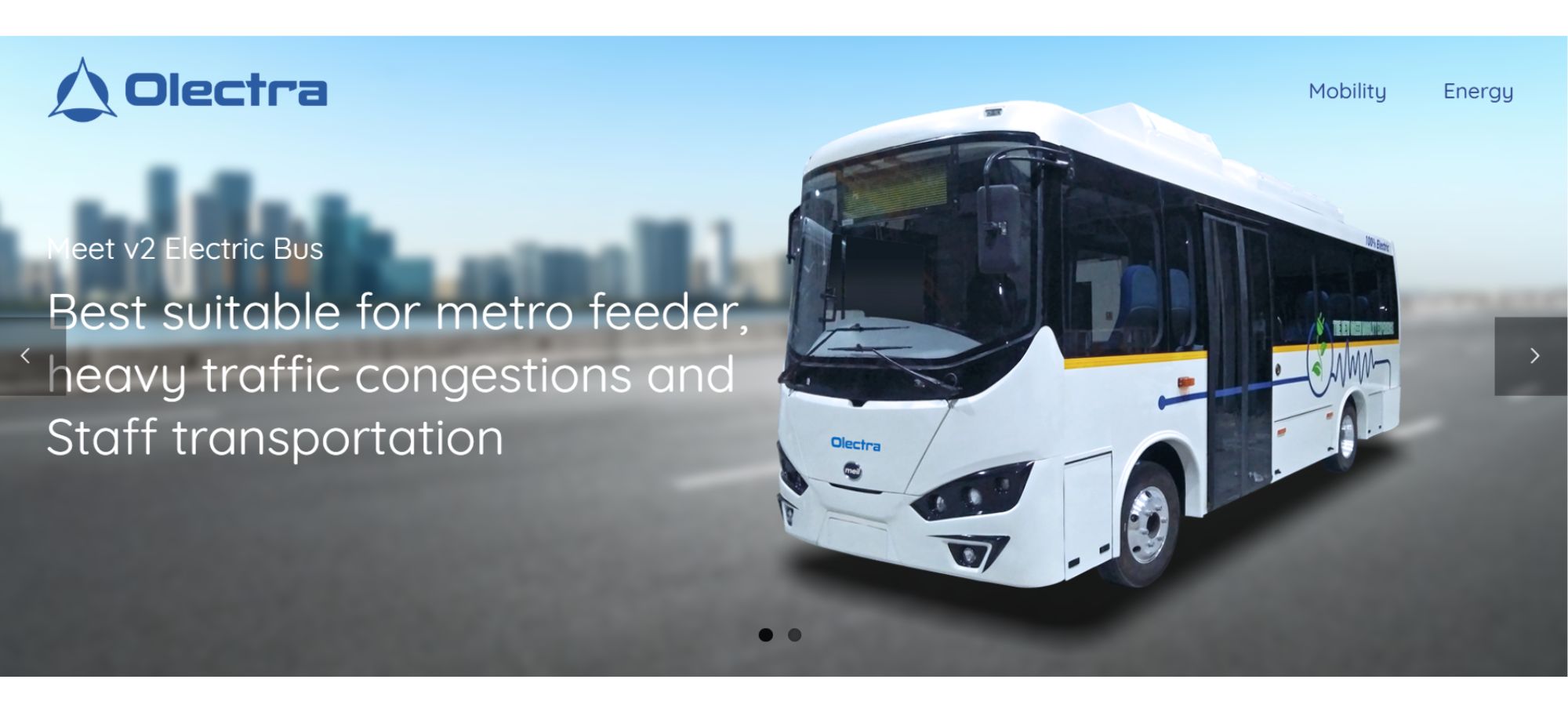
Olectra Greentech might seem like just another electric vehicle company. But they’re not building cars for individuals or experimenting with prototypes that may or may not scale.
What are they really building (and why it matters more than it sounds)
Olectra Greentech is working on something far more grounded and, in many ways, more difficult. Electric public transport, specifically electric buses that cities can actually deploy at scale.
This matters because public transport is where electrification creates the largest real-world impact. A single electric bus can replace multiple diesel vehicles in terms of emissions and daily usage. But building and deploying these systems isn’t just about manufacturing a vehicle. It involves infrastructure, government partnerships, and long-term operational reliability.
It didn’t start as a startup story, it started with a shift toward cleaner mobility
Olectra Greentech isn’t a typical early-stage startup. It evolved as part of a larger shift toward sustainable mobility in India.
Olectra Greentech Limited, established in 2000, is a leading electric bus manufacturer and part of the Megha Engineering & Infrastructures Ltd. (MEIL) Group. While P. V. Krishna Reddy is on its Board of Directors, the company’s strategic direction is largely shaped by the broader leadership of the MEIL Group.
The company, part of the MEIL (Megha Engineering & Infrastructures Limited) group, began focusing on electric mobility at a time when cities were starting to seriously look at reducing pollution and fuel dependency.
The idea wasn’t to build something experimental. It was to solve a very visible, very urgent problem, urban pollution caused by diesel-powered public transport.
If you look at how electric buses are being discussed in India’s broader policy and urban planning conversations, especially in terms of fleet electrification, subsidy frameworks, and city-level clean mobility targets, you start to see why this transition is accelerating. It’s not just an industry trend, but a coordinated push across governance and infrastructure planning.
This is clearly reflected in ongoing discussions around electric bus adoption and government policy support in India’s clean public transport transition, which highlights how cities are actively shifting toward electrified mobility systems to reduce emissions and dependence on fossil-fuel-based transit.The momentum in this space didn’t emerge suddenly. It has been building gradually as urban centers face increasing pressure to modernize transport while addressing air quality concerns.
The bold decision: going after public transport instead of personal mobility
While much of the EV conversation in India has focused on two-wheelers and passenger cars, Olectra chose a different path.
They focused on buses.
This is a tougher segment. It involves:
long procurement cycles,
government tenders,
and high expectations around reliability.
But it also offers scale. If you can successfully deploy electric buses across cities, the impact is immediate and visible.
Olectra partnered with global EV manufacturer BYD (Build Your Dreams) to bring in electric bus technology and adapt it for Indian conditions. This collaboration allowed them to move faster than building everything from scratch.
The breakthrough moment: when electric buses moved from trials to real city roads
For a long time, electric buses in India were seen as pilot projects. Limited deployments, experimental runs, not something cities depended on daily.
That started changing when companies like Olectra began deploying buses at scale.
Their electric buses are now operational across multiple Indian cities, including Hyderabad, Mumbai, Pune, and others. This shift from trial to adoption is what makes their journey significant.
Early days weren’t glamorous: proving reliability over hype
Unlike consumer-facing startups, Olectra couldn’t rely on branding or early excitement to grow.
Their biggest challenge was simple but demanding, proving that electric buses can run reliably every single day.
Public transport systems don’t tolerate inconsistency. Buses need to run on schedule, handle long routes, and perform across different weather and traffic conditions.
In the early phases, this meant:
testing vehicles extensively,
working closely with transport authorities,
and refining performance over time.
Trust wasn’t built through marketing. It was built through operations.
Building infrastructure, not just vehicles: what they focused on over the years
One of the key things about Olectra’s approach is that they’re not just manufacturing buses.
They’re part of a broader system that includes:
charging infrastructure,
fleet management,
and operational support.
Because without these, electric buses don’t work at scale.
If you go deeper into how electric mobility ecosystems are structured, you’ll notice that vehicles are only one part of the equation. Olectra’s work sits across multiple layers of that system.
The hard part no one talks about: scaling with policy, infrastructure, and expectations
Scaling electric public transport is not just a technical challenge. It’s deeply tied to policy, funding, and infrastructure readiness.
Government tenders, subsidies, and urban planning decisions all play a role. At the same time, expectations from the public remain high. Buses need to be reliable, cost-effective, and efficient from day one.
There’s also the challenge of transitioning from diesel-based systems that have been in place for decades.
Olectra isn’t experimenting with EVS, it’s proving they can work at scale
What makes Olectra different is that they’re not operating in theory.
Their buses are already on the road. People are using them daily. Cities are integrating them into their transport systems.
That changes the conversation from “will electric mobility work” to “how fast can it scale.”
Olectra sits right in that shift. Between possibility and execution.
And as more cities move toward electrification, companies that can deliver reliable, scalable solutions will define how that transition actually happens.
Startup #7: Banyan Nation
Banyan Nation sounds like a recycling company. Collect plastic, process it, reuse it. Simple.
But that’s not what they’re really building.
What are they really building (and why it matters more than it sounds)
Banyan Nation building a traceable, high-quality recycled plastic supply chain, something that didn’t exist in a structured way before. The problem with plastic recycling isn’t just collection. It’s quality and consistency.
Most recycled plastic in India has historically been:
inconsistent,
low-grade,
and difficult for large manufacturers to reuse.
That creates a gap. Big brands want to use recycled plastic to meet sustainability goals, but they can’t compromise on material quality, especially when it comes to packaging standards, safety requirements, and repeatability in manufacturing processes. This is where traceability and material consistency become just as important as recycling itself.
This challenge is exactly what platforms like Banyan Nation are addressing through EPR-linked traceable recycled plastic systems focused on producing industrial-grade, near-virgin quality materials for large-scale manufacturing. Instead of treating recycling as an end-of-pipe activity, the focus shifts toward creating reliable input material that can actually re-enter mainstream production cycles.
Banyan Nation sits exactly in that gap. If you explore their platform, you’ll notice how strongly they focus on “near-virgin quality” recycled granules, not just waste processing.
It didn’t start with recycling, it started with a broken system
Banyan Nation was founded in 2013 by Mani Kishore Vajipeyajula and Rakiran Madangopal, and the starting point wasn’t “let’s recycle plastic.”
It was a deeper observation. India already had a massive informal recycling ecosystem. Waste was being collected and processed, but the system lacked:
standardization,
traceability,
and scalability.
This meant that even though recycling was happening, it couldn’t integrate with large-scale manufacturing in a reliable way.
Instead of replacing the system, Banyan Nation looked at how to organize and upgrade it.
The bold decision: fixing quality, not just quantity
Most players in recycling focus on volume. Collect more waste, process more material.
The Banyan Nation chose a harder path. They focused on quality control.
They built processes to:
clean, segregate, and process plastic scientifically,
remove contaminants,
and standardize output into usable industrial-grade material.
This is what allows their recycled plastic to be used by large FMCG and manufacturing companies, not just low-end applications.
The breakthrough moment: when large brands started taking recycled plastic seriously
For a long time, recycled plastic was seen as a compromise. Something you use when cost matters more than performance.
That perception started changing when sustainability became a business priority, not just a CSR initiative.
As brands began committing to recycled content in packaging, they needed suppliers who could deliver consistent, high-quality material.
That’s where Banyan Nation started becoming relevant.
Early days weren’t glamorous: building credibility in an unorganized sector
Working in recycling in India means dealing with complexity at every level.
In the early days, Banyan Nation had to:
work with informal waste networks,
build trust across fragmented stakeholders,
and prove that their output could match industrial standards.
This is not a space where you can scale quickly through marketing. Progress comes from process reliability and consistent output.
Over time, as they delivered consistent material quality, built repeatability in operations, and strengthened relationships with large enterprise clients, that credibility started compounding. This is also reflected in how Banyan Nation has evolved into a large-scale integrated plastics recycler, serving 70+ major brands and operating at industrial scale with EPR-driven revenue models, strong manufacturing capacity, and a clear pathway toward IPO readiness as part of its long-term growth strategy, which highlights how deeply embedded the company has become in India’s formal recycling and circular economy ecosystem.
Building systems, not just plants: what they focused on over the years
Banyan Nation’s real strength lies in how they combine data, supply chain, and material science.
They didn’t just set up recycling plants. They worked on:
digitizing waste supply chains,
tracking material flows,
and optimizing processing systems.
This allows them to create a more predictable and scalable recycling model.
The hard part no one talks about: making sustainability commercially viable
One of the biggest challenges in recycling is economics. For recycled plastic to scale, it has to compete with virgin plastic not just environmentally, but commercially. That means maintaining consistent quality, keeping costs competitive, and ensuring supply reliability.
Interestingly, a similar kind of discipline applies when businesses try to scale their digital presence.
Just like recycled materials need to meet strict standards to gain market trust, a website needs a strong technical foundation to perform consistently in search. This is where best practices you must know about technical SEO start to matter, not as a checklist, but as a system that ensures reliability at scale. Factors like site speed, crawlability, structured data, and clean architecture directly impact how efficiently your content is discovered and trusted by search engines.
In both cases, whether it’s recycled plastic entering supply chains or content entering search ecosystems, the underlying principle is the same: consistency builds confidence.
You can’t rely on one-off wins. It’s about creating a system that delivers predictable performance over time, making it easier for stakeholders, whether buyers or algorithms, to choose you again and again.
Balancing all three is difficult, especially in a market where raw material prices fluctuate.
Banyan nation isn’t cleaning plastic, it’s rebuilding how it flows through the economy
What Banyan Nation represents is a shift from waste management to resource management.
Instead of treating plastic as something to dispose of, they’re treating it as a material that can be reintegrated into the production cycle at scale.
That changes how industries think about plastic entirely.
It moves the conversation from:“how do we manage waste?”
to
“how do we design systems where waste doesn’t exist in the first place?”and that’s a much bigger shift than recycling alone.
Startup #8: Dozee

Dozee is a health-tech startup focused on contactless remote patient monitoring using AI-powered sensors placed under a mattress.
It tracks vital parameters like heart rate, respiration, and sleep patterns in real time, without requiring wearables or manual intervention. The system is widely used in hospitals to enable early detection of patient deterioration and improve continuous care.
What are they really building (and why it matters more than it sounds)
At first glance, Dozee looks like a health-tech device company. A sensor under a mattress, a dashboard, some vitals on a screen.
But what they’re actually building is a contactless patient monitoring system that can continuously track critical health signals without wires, wearables, or invasive devices.
That sounds simple, but in healthcare, it changes a lot. Traditionally, patient monitoring in hospitals depends on periodic manual checks or wired ICU-grade systems. Both approaches have limitations, either they are not continuous, or they are too expensive and infrastructure-heavy to scale across general wards.
Dozee is trying to bridge that gap by making continuous monitoring available beyond ICUs, in regular hospital beds and even in home care setups. This shift is also reflected in how healthcare innovation platforms are recognizing such solutions, with companies like Dozee being featured among India’s leading remote patient monitoring innovators, highlighting their growing role in transforming patient care accessibility and efficiency.
This recognition reinforces the broader shift toward scalable, tech-enabled care models that prioritize continuous monitoring without the complexity and cost of traditional systems.
It didn’t start as a hospital product, it started with a basic question about care gaps
Dozee was founded by Mudit Dandwate and Gaurav Parchani, and the starting point wasn’t “let’s build a medical device company.”
It came from a simple observation. In hospitals, critical changes in patient condition are often detected late because monitoring is not continuous across all wards.
ICUs have advanced systems, but general wards rely heavily on manual checks done every few hours. That delay can sometimes make a difference in outcomes.
The question they explored was simple but powerful.
What if patient monitoring didn’t require constant human intervention, but still stayed continuous?
That line of thinking led them to a very different approach, using micro-vibration sensing rather than traditional wearable or wired systems.
The bold decision: monitoring health without touching the patient
Most medical devices rely on direct contact, electrodes, wearables, or implants.
Dozee took a different route.
They built a system where a thin sensor placed under a mattress can detect micro-vibrations generated by the human body, and then convert those signals into meaningful health metrics like:
heart rate trends,
respiration patterns,
sleep cycles,
and early warning indicators of deterioration.
This removes one of the biggest friction points in healthcare monitoring: patient discomfort and setup complexity.
It also allows hospitals to scale monitoring without equipping every bed with expensive ICU-grade infrastructure.
The breakthrough moment: when hospitals started trusting “contactless ICU-style monitoring”
For a long time, the idea of monitoring critical health signals without physical sensors seemed uncertain in clinical environments.
Hospitals are conservative systems. Adoption doesn’t happen because something is innovative, it happens when it is proven reliable.
Dozee’s turning point came when hospitals began deploying their system for early warning and ward-level monitoring, not just ICU use cases.
This shift matters because it moves monitoring from reactive to proactive. Instead of waiting for visible deterioration, the system can flag early risk patterns.
If you explore real-world discussions and deployments of AI-based hospital monitoring in India, you’ll see how this category is evolving: https://www.google.com/search?q=Dozee+hospital+deployment+India+AI+monitoring
Early days weren’t glamorous: convincing doctors is harder than building hardware
In healthcare, the hardest part is rarely the technology. It is trust.
Dozee had to work through:
clinical validation requirements,
hospital adoption barriers,
and skepticism around non-traditional monitoring methods.
Doctors and hospital administrators don’t adopt new systems easily, especially when patient safety is involved. So early progress depended heavily on pilots, validation studies, and real-world testing inside hospital environments, something clearly reflected in how Dozee harnesses AI for continuous patient monitoring and early warning systems, where the emphasis is on clinical-grade accuracy, real-time monitoring, and measurable impact like reducing nursing workload and enabling early detection of critical conditions. Unlike consumer tech, adoption is slow but deeply consequential once it happens.
Building continuous care, not just devices: what they focused on over the years
Dozee is not just a hardware product.
Their system combines:
hardware sensing (under-mattress device),
AI-based health analytics,
and hospital-grade dashboards for clinicians.
The goal is not just data collection, but actionable alerts and predictive insights.
This is important because healthcare systems are overloaded. Nurses and doctors cannot manually track every patient continuously.
So the system is designed to act like a silent layer of monitoring that runs in the background.
The hard part no one talks about: healthcare innovation is slow by design
Unlike other industries, healthcare doesn’t scale quickly even if something works.
There are multiple barriers:
regulatory approvals,
clinical validation,
hospital procurement cycles,
and patient safety considerations.
Even after deployment, systems must prove reliability over long periods.
This makes scaling slow but stable.
Dozee isn’t just monitoring patients, it’s changing where monitoring happens
What Dozee represents is a shift in the location of care intelligence.
Instead of monitoring being limited to ICUs or nurse check-ins, it moves into the background of every hospital bed.
That changes the structure of patient care itself. It allows earlier detection, reduces manual workload, and potentially improves outcomes by shortening response time.
And if this model scales further, it doesn’t just change hospitals. It changes how healthcare systems think about continuous care.
Startup #9: Quantum Energy
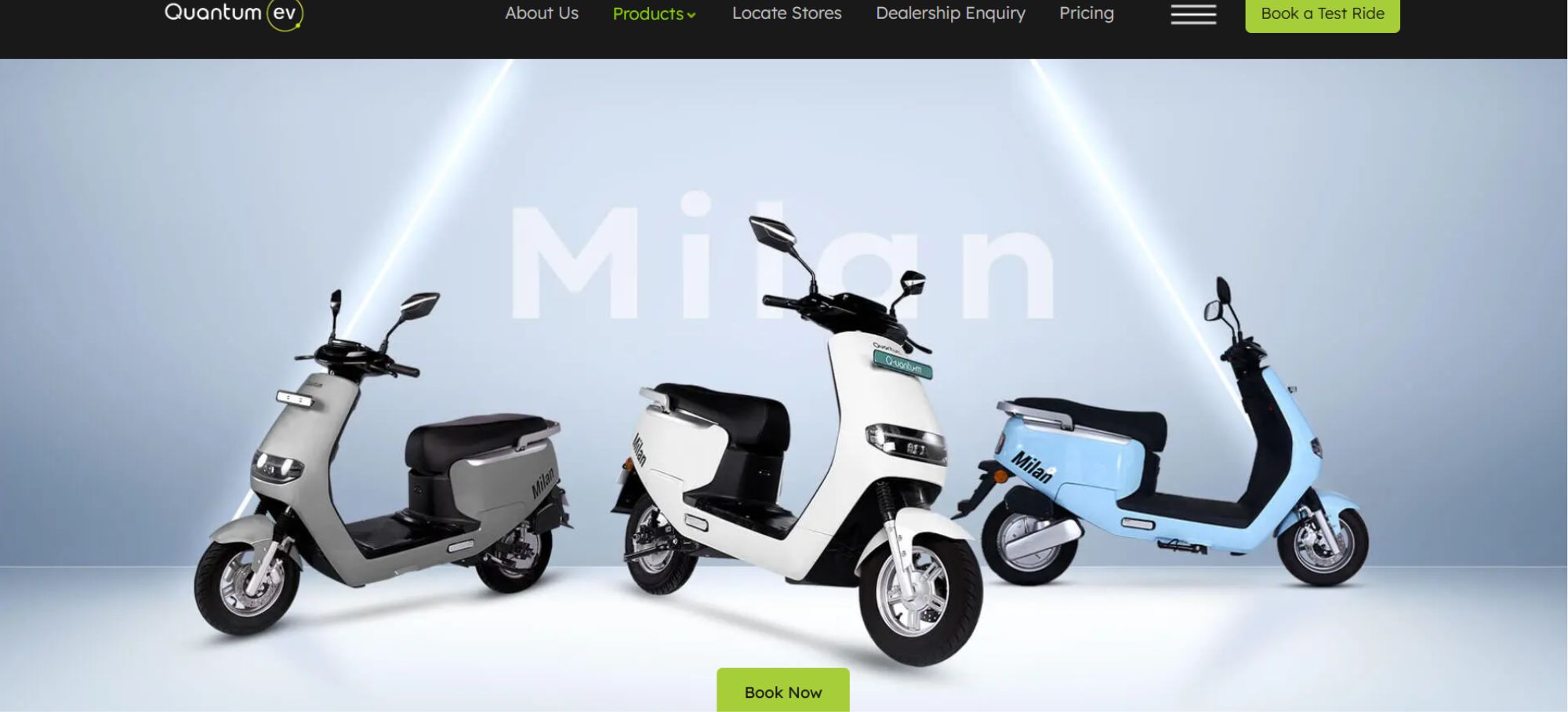
Quantum Energy is an electric mobility startup focused on designing and manufacturing electric scooters for urban transportation. It emphasizes practical range, battery reliability, and everyday usability rather than just performance specs. The broader goal is to make EV adoption more accessible and functional for daily commuters.
What are they really building (and why it matters more than it sounds)
At first glance, Quantum Energy looks like another electric vehicle startup in a crowded market.
But the real idea is more grounded. They’re focused on building electric scooters that actually work for everyday Indian roads and usage patterns, not just EVs that look good in marketing campaigns.
This matters because the EV transition in India is not just about replacing engines. It’s about replacing a very specific behavior system: high usage, mixed road conditions, long daily travel, and price sensitivity.
Quantum Energy is positioning itself in the practical electric mobility segment, where durability, range consistency, and serviceability matter more than design hype or tech storytelling.
It didn’t start as a trend chase, it started with a mobility gap
Quantum Energy was founded in 2020, Chakravarthy Chukkapalli is the Managing Director and key promoter of Quantum Energy, a Hyderabad-based electric two-wheeler manufacturer and the starting point wasn’t “let’s build an EV company because EVs are hot.”
It came from a simple but important observation. India’s two-wheeler market is massive, but electrification at the mass level still had gaps, especially in terms of:
affordability,
range reliability,
and real-world usability.
Most early EV scooters either targeted premium buyers or lacked the robustness needed for daily high-frequency usage.
So the question became less about innovation for its own sake and more about how to make electric mobility genuinely practical for everyday riders.
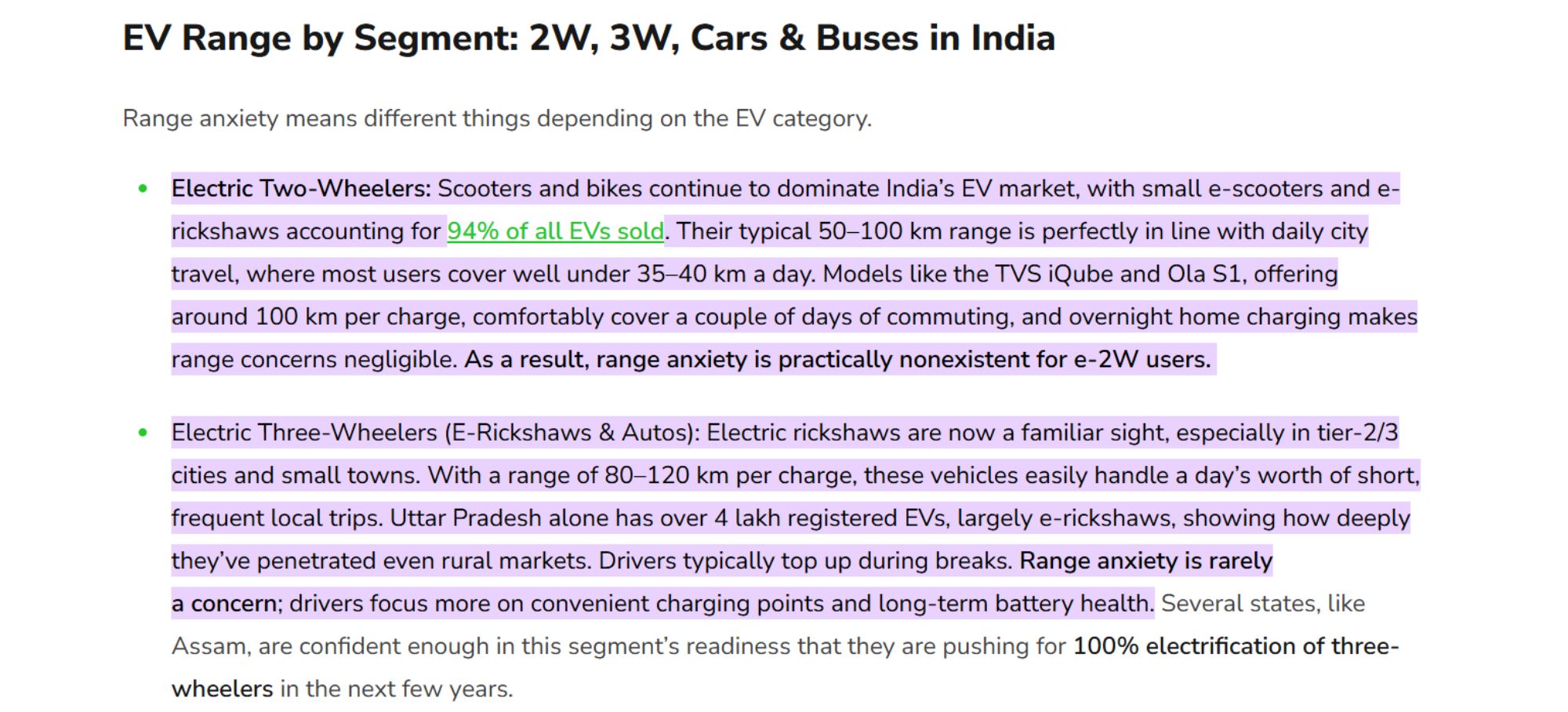
If you look at broader EV adoption challenges in India, this gap between expectation and usability comes up repeatedly, especially in conversations around range anxiety, which is often less about actual battery limitations and more about perception, awareness, and infrastructure readiness.
Ultimately, solving for adoption means addressing these everyday friction points, not just pushing technological boundaries.
The bold decision: not building luxury EVs, but utility-first electric scooters
Instead of going after the premium EV segment, Quantum Energy focused on a different direction.
They built scooters designed for:
daily commuting,
commercial usage patterns,
and cost-sensitive buyers.
This includes working on models like the Quantum Milan and Quantum Bziness series, which are aimed at both personal and small business use cases.
The idea is not to position EVs as aspirational products, but as functional replacements for existing petrol scooters.
The breakthrough moment: when EVs started being treated as practical, not experimental
For a long time, electric scooters in India were seen as either:
too experimental, or
too premium.
The shift started when customers began expecting EVs to behave like normal scooters, not niche products.
Quantum Energy’s relevance grew in this phase because the focus moved toward:
real-world mileage consistency,
battery performance in varied conditions,
and service accessibility.
This is where EV adoption actually becomes meaningful, not in announcements, but in everyday usability.
Early days weren’t glamorous: building trust in a crowded EV market
The EV space in India is extremely competitive, and customer skepticism is high.
In the early stages, Quantum Energy had to deal with:
market confusion due to multiple EV brands,
concerns around battery life and servicing,
and hesitation from buyers used to petrol reliability.
Unlike software, EV adoption depends heavily on physical experience. One bad user experience can affect trust significantly.
So early growth depended on demonstrating:
consistent product performance,
service network reliability,
and long-term usability.
Building mobility systems, not just scooters: what they focused on over the years
Quantum Energy is not just assembling scooters.
Their focus includes:
battery systems integration,
vehicle design for Indian road conditions,
and after-sales service networks.
This matters because EV success is not only about the vehicle, it’s about the entire ecosystem around it, especially charging and maintenance support.
Without that, even a good product fails in real-world adoption.
The hard part no one talks about: EV adoption is not a technology problem, it’s a behavior problem
One of the biggest misconceptions in the EV space is that technology alone drives adoption.
In reality, the barriers are behavioral:
range anxiety,
charging habits,
resale uncertainty,
and trust in long-term performance.
Even if the technology works, changing daily mobility behavior takes time.
Quantum energy isn’t trying to redefine EVs, it’s trying to make them normal
What Quantum Energy represents is not disruption for attention.
It’s normalization.
They are part of a shift where electric scooters stop being “new technology” and start becoming just another option in the mobility stack.
And in markets like India, that transition is actually more important than flashy innovation.
Because adoption doesn’t happen when something is exciting. It happens when it becomes boringly reliable.
What does it actually take to stand out in Hyderabad’s startup ecosystem?
You’ve just seen startups operating across completely different spaces, with different models and growth paths, yet there’s a common thread.
The ones that move forward are able to turn what they’ve built into something the market actually notices, understands, and trusts.
Because building a product is only one part. Growth becomes difficult when visibility is inconsistent, acquisition costs keep rising, messaging lacks clarity, and channels operate in isolation.
Over time, this is where momentum starts to slow down, not because the idea is weak, but because growth never becomes a structured system.
That’s where the shift usually happens. Instead of treating marketing as separate activities, it starts working better when it’s connected into a single, consistent growth layer.
This is the approach we follow at ZeroAdo, working with startups as a long-term growth partner to bring together SEO, performance marketing, automation, and omnichannel engagement into one system that compounds over time.

If someone discovers your startup today, what do they actually experience? Is the value clear, is there trust, and is there a reason to choose you?
These are often the gaps that hold growth back.
If you’re looking to understand where your growth currently stands, you can book a free discovery meeting with ZeroAdo.
The focus is simple: identify what’s not working, what’s missing, and what can be improved immediately so your growth becomes more predictable and structured.
Handpicked Articles for You
Frequently asked question about startups in Hyderabad
Hyderabad’s startup ecosystem has been growing steadily, with companies like UrbanKisaan, Loopworm, Skyroot Aerospace, Freyr Energy,and Dozee gaining attention across industries.
These startups operate in sectors like HR tech, fintech, spacetech, AI, and healthtech.
What makes them worth watching is their ability to scale beyond India, raise significant funding, and build globally relevant products. Many of these companies are already working with enterprise clients or expanding into international markets.
Hyderabad offers a mix of strong infrastructure, relatively lower operational costs, and access to skilled talent compared to cities like Bengaluru and Mumbai. Initiatives like T-Hub and government-backed innovation programs have also supported early-stage startups.
At the same time, the presence of global tech companies and investors has created a strong ecosystem for funding and mentorship. This combination is helping startups grow faster and compete on a global level.
Several sectors are contributing to Hyderabad’s startup growth, including fintech, SaaS, artificial intelligence, healthcare technology, and spacetech. Companies like HighRadius and Yellow.ai are examples of how enterprise SaaS and AI are scaling globally.
Healthtech and spacetech are also gaining traction, with startups like Innovaccer and Skyroot Aerospace building advanced solutions. These sectors are attracting both funding and long-term innovation opportunities.
Hyderabad startups are often considered more cost-efficient while still maintaining access to high-quality talent. This allows companies to scale operations without the same level of expense seen in Bengaluru.
While Bengaluru still leads in terms of startup volume, Hyderabad is catching up with focused innovation and strong enterprise-driven startups. Many companies based here are building global products rather than limiting themselves to local markets.
Investors and founders should focus on startups with strong product-market fit, scalable business models, and global expansion potential. Many Hyderabad startups are building SaaS or deep-tech solutions that naturally extend beyond India.
It’s also important to evaluate the founding team, funding history, and customer base. Startups that already work with enterprise clients or show consistent growth tend to have stronger long-term potential.
Key sectors include SaaS, artificial intelligence, healthtech, biotech, and climate tech. These industries are seeing consistent traction due to increasing demand for scalable and technology-driven solutions.
Initiatives like T-Hub and Genome Valley have played a role in strengthening these sectors. They provide infrastructure and support systems that help startups experiment, build, and scale more effectively.
Yes, Hyderabad startups are increasingly attracting attention from global investors, especially in SaaS and deep-tech segments. Many companies are building products for international markets from the start.
Data from platforms like Tracxn and Crunchbase shows rising participation from global venture capital firms. This reflects growing confidence in Hyderabad’s ability to produce scalable and globally relevant startups.
Hyderabad is often seen as more cost-efficient and less chaotic compared to Bangalore. It allows startups to operate with lower burn rates while still accessing strong talent and infrastructure.
While Bangalore leads in overall scale, Hyderabad stands out for building sustainable, product-focused companies. Many founders prefer it for long-term stability rather than rapid, high-pressure growth.
Many Hyderabad startups operate with a global-first mindset, especially in SaaS and technology-driven sectors. They often build products that cater to international customers from day one.
This approach allows them to tap into larger markets like the US and Europe. It also helps startups scale faster by combining global demand with cost-efficient operations in India.
Hyderabad is considered a founder-friendly city due to its lower costs and supportive ecosystem. It allows startups to experiment and refine their models without excessive financial pressure.
Access to incubators, accelerators, and a growing founder community makes it easier to get started. This environment supports steady growth rather than forcing rapid, unsustainable scaling.
